
EZ-VTM Vitamins, Minerals and Digestive Aids
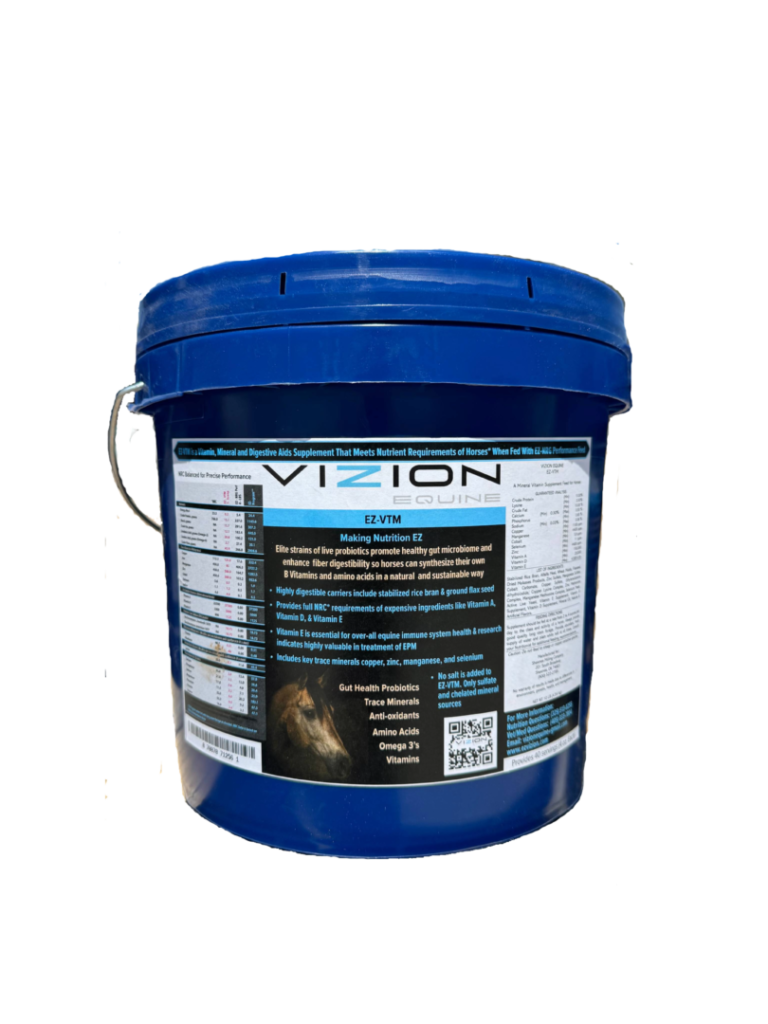
EZ-VTM® Vitamins, Minerals and Digestive Aids EZ-VTM® is our vitamin, mineral, and probiotic digestive aids supplement that meets Nutrient Requirements of Horses* (NRC) when fed as recommended. EZ-VTM® uses strains of live probiotics to promote healthy gut microbiome and fiber digestibility, so horses synthesize their own B Vitamins and amino acids in a natural sustainable way. This product features adequate dosages to meet NRC requirements of expensive ingredients such as Vitamin A, Vitamin D, and Vitamin E in their most digestible forms. Vitamin E is considered useful in treatment of EPM and over-all immune system health. EZ-VTM® includes key trace minerals copper, zinc, manganese and selenium and uses only highly digestible sulfate and chelated mineral sources
- Highly digestible carriers include ground flax see and stabilized rice bran
- No salt is added to EZ-VTM®
- Only highly digestible sulfate and chelated mineral sources are used
- Reduce or Eliminate Need for Added Supplements
$89.00
INGREDIENTS STABILIZED RICE BRAN, ALFALFA MEAL, WHEAT MIDDS, FLAXSEED, DRIED MOLASSES PRODUCTS, ZINC SULFATE, MANGANESE SULFATE, COBALT CARBONATE, COPPER SULFATE, ETHYLENEDIAMINE DIHYDROIODIDE, COPPER LYSINE COMPLEX, ZINC METHIONINE COMPLEX, MANGANESE METHIONINE COMPLEX, SELENIUM YEAST, ACTIVE LIVE YEAST, VITAMIN E SUPPLEMENT, VITAMIN A SUPPLEMENT, VITAMIN D SUPPLEMENT, MINERAL OIL, NATURAL & ARTIFICIAL FLAVORS.
FEEDING DIRECTIONS Supplement should be fed at a rate from 2 to 4 ounces per day to the class and activity of a horse. Always provide good quality long stem forage. Provide abundant, fresh supply of water and plain white salt at all times. Consult your Nutritionist for additional feeding recommendations. Caution: Do not feed to sheep or copper sensitive species.
*Nutrient Requirements for Horses – a compilation of scientific data published by the National Academy of Sciences (a private non-profit society congressionally funded and mandated to document Animal Nutrition Research). This publication is updated every 8-12 years with research pulled from universities and foundations across the globe.